Swiggy Case Study: Enabling Multi-Restaurant Composite Delivery

1. Product Background
Swiggy is India’s largest food delivery platform, with more than 2.7 lakh restaurants onboarded across 500+ cities. Its logistics network and fleet optimisation are among the best in the world. Swiggy built Instamart, Genie, and Dineout on top of this same logistics infrastructure.
Food delivery is a high-frequency business but also high-churn. Reducing friction and meeting strong user intent is critical for both revenue and retention.
This case study focuses specifically on a behaviour observed in Tier-1 users: ordering multiple items from different restaurants in a single meal window.
2. Problem Statement
Today, users cannot combine items from multiple restaurants into one order. They need to:
- Place multiple separate orders
- Pay multiple delivery fees
- Wait for multiple riders
This creates friction for:
- Users with different taste preferences in the same household
- Users who want a meal + dessert combo from different outlets
- Users who want to try items across restaurants
The opportunity: Let users build a composite order across restaurants and get a single delivery.
3. User Personas
Rahul — 29, Bengaluru
Works at a tech startup, lives with his partner. Both have different food preferences. Orders 12–15 times a month.
Nandini — 24, Pune
Lives with roommates. Group orders are frequent. They want different items from different restaurants.
4. Insights
- Food preferences diverge heavily within the same household
- Swiggy Genie is sometimes used as a hack for cross-restaurant orders
- Users care about timing — they want everything to arrive together
- High-intent use cases (weekends, celebrations) see willingness to pay a premium
5. Proposed Solution: Composite Food Cart
The idea: Allow users to add items from multiple restaurants into one composite cart as long as they meet certain radius, timing, and compatibility constraints.
Key Features
- Add items from multiple restaurants
- Single checkout and payment
- Unified delivery tracking
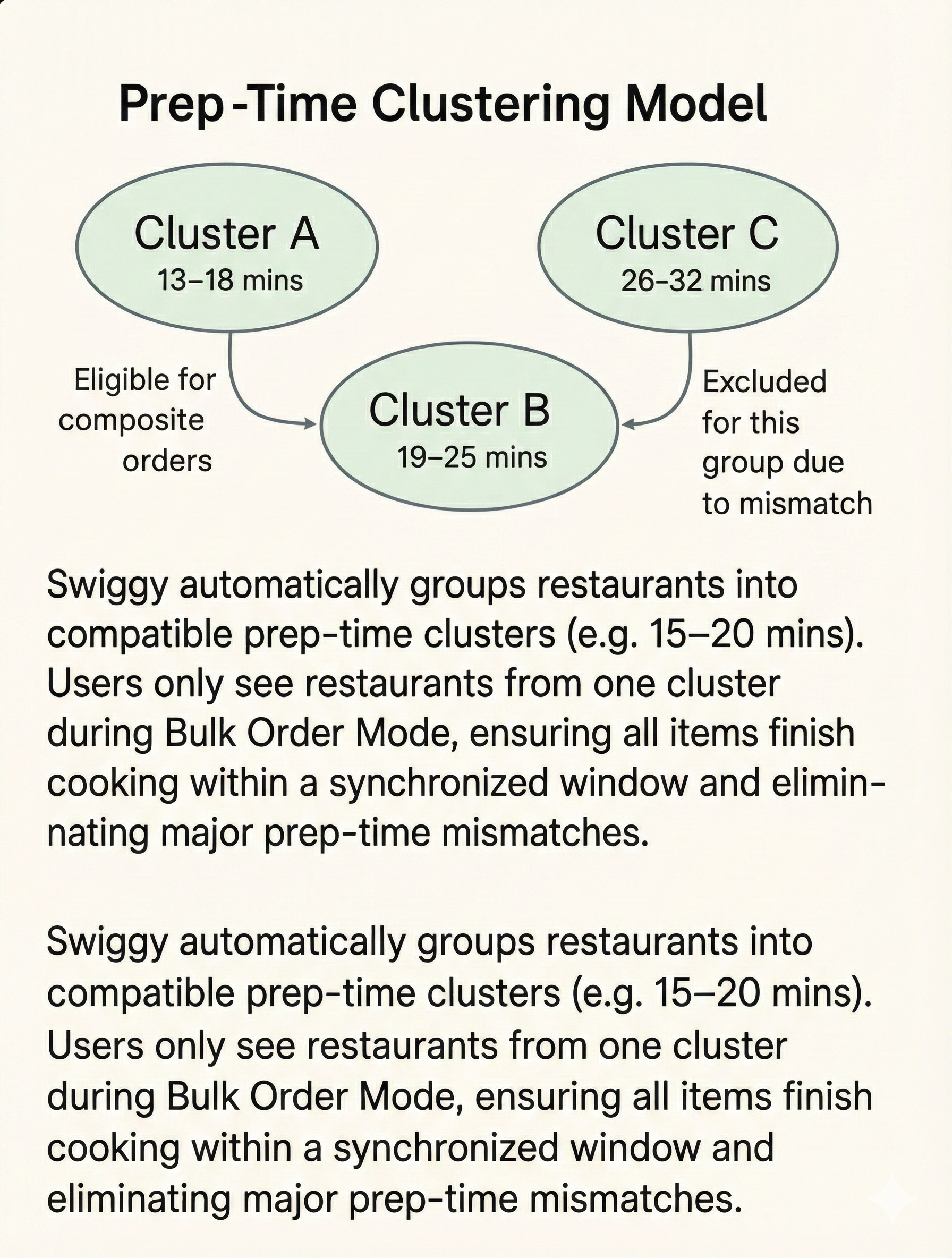
- Smart batching by kitchen readiness time
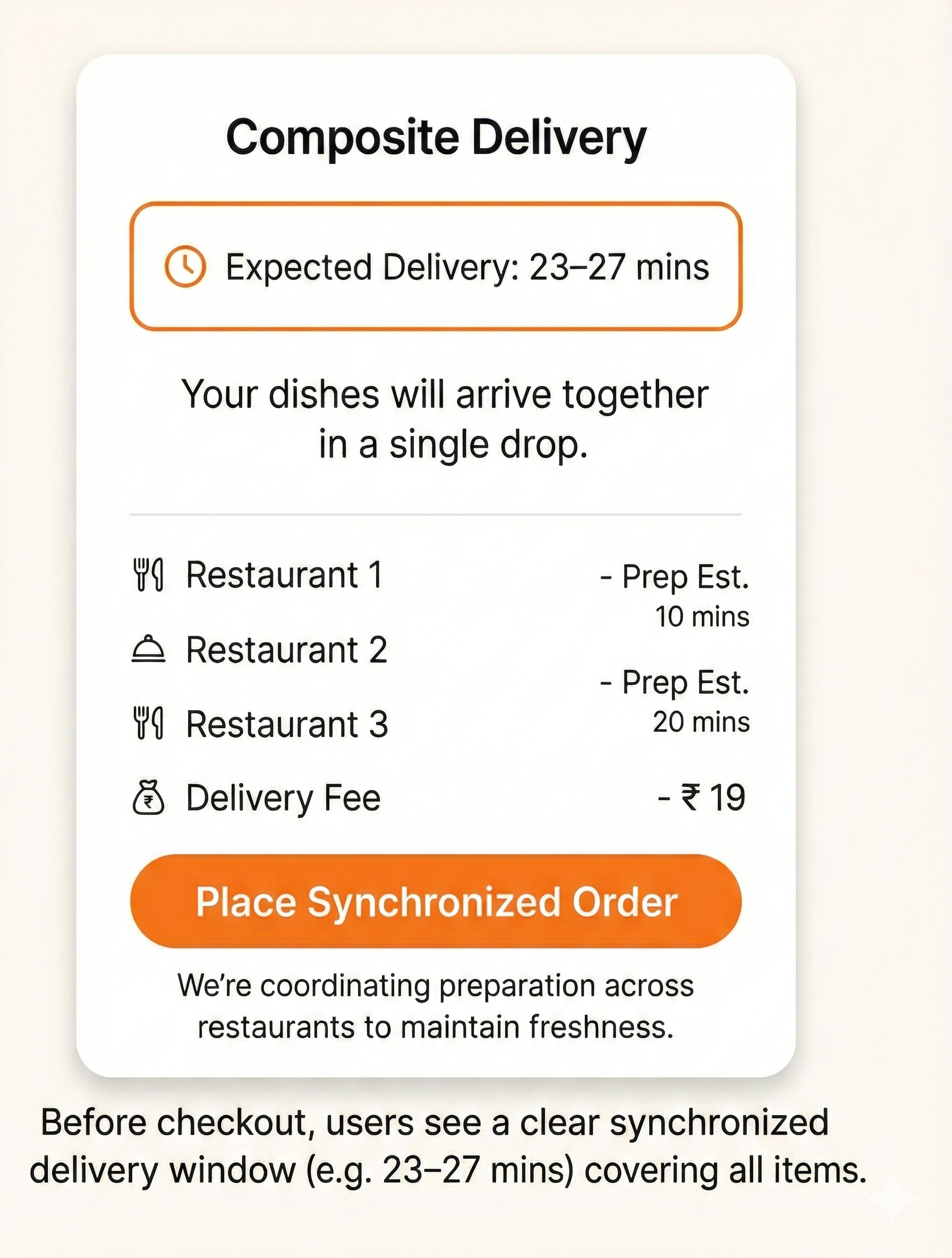
- Price transparency for additional logistics fee
6. Operational Constraints
- Only restaurants within a specific delivery corridor can be combined
- Rider needs optimal batching path
- Kitchen prep time mismatch must be handled (buffering + sequencing)
- High-load zones may disable composite ordering dynamically
7. Pricing Model
Composite delivery introduces new marginal costs on Swiggy’s logistics side. A simple, transparent model can solve this:
| Component | Fee |
|---|---|
| Base delivery | ₹35–₹45 |
| Additional restaurant pickup | ₹15–₹25 |
| Peak-time dynamic fee | ₹10–₹20 |
High-intent users are comfortable paying +₹20 to +₹40 for convenience.
8. Success Metrics
- Conversion rate for multi-restaurant carts
- Incremental AOV for composite vs single-restaurant orders
- Order success rate (batched delivery completion)
- Repeat rate for users who try composite ordering
9. Risks & Mitigations
- Delay risk: Mitigated with prep-time sequencing
- Rider overload: Enable composite ordering only during stable capacity
- User confusion on fees: Upfront price explanation
- Operational failure: Auto-split into two orders if incompatibility detected
10. Final Recommendation
The Composite Cart unlocks a new behaviour for Swiggy: household-level ordering instead of individual ordering. This expands AOV, improves retention and increases Swiggy’s defensibility against competitors.
Given India’s diverse food preferences, composite food ordering has very strong product-market fit potential in Tier-1 households.